Stress has quietly become one of the most common challenges in modern life. Many people awaken with thoughts of deadlines, responsibilities, and unresolved problems. Between work pressure, constant notifications, and the fast pace of daily life, it is easy to feel overwhelmed.
However, stress itself is not always harmful. In fact, the stress response is a natural survival mechanism that helps the body stay alert and react quickly in difficult situations. The problem begins when stress becomes constant, leaving the body no chance to recover.
Learning how to manage stress effectively is not about eliminating pressure. Instead, it is about developing habits and strategies that help the mind and body return to a balanced state. When you understand how stress works and practice simple techniques regularly, it becomes much easier to handle difficult moments without feeling exhausted or burnt out.
Understanding What Happens During Stress
When the brain senses a challenge or threat, it activates what is often called the fight-or-flight response. This response triggers the release of stress hormones such as adrenaline and cortisol.
These hormones prepare the body to react quickly. Your heart rate increases, breathing becomes faster, and your muscles become more alert. This reaction is useful in short bursts, but when it continues for long periods, it can begin to affect overall well-being.
Long-term stress may lead to problems such as fatigue, poor sleep, headaches, difficulty concentrating, and irritability. That is why learning to calm the body after stressful situations is so important.
The good news is that the body also has a natural calming system known as the rest-and-recover response. Certain habits and techniques can activate this system and help bring the body back into balance.
Breathing Techniques That Calm the Nervous System
One of the fastest ways to reduce stress is to slow your breathing. Breathing patterns directly influence heart rate and nervous system activity.
Box Breathing
Box breathing is a simple technique that helps the body relax and regain focus.
- Breathe in slowly through your nose for four seconds.
- Hold your breath for four seconds.
- Exhale gently through your mouth for four seconds.
- Pause for four seconds before taking the next breath.
Repeating this cycle for a few minutes can lower heart rate and help the body shift into a calmer state.
The Double Inhale Technique
Another effective method is taking two quick inhales through the nose, followed by a long, slow exhale through the mouth. This breathing pattern allows the lungs to release excess carbon dioxide and often creates a quick feeling of relief.
Many people notice that just a few rounds of controlled breathing can reduce tension almost immediately.
Changing the Way You Think About Stress
Sometimes the biggest source of stress is not the situation itself, but the way we interpret it. The mind tends to imagine worst-case scenarios, especially when facing uncertainty.
A beneficial strategy is to pause and question your thoughts.
Ask yourself:
- Could we consider whether this situation is truly as serious as it currently seems?
- What is the most realistic outcome?
- Will this problem still matter a year from now?
Often, simply examining the situation more calmly can reduce the emotional intensity.
Another useful approach is to view challenges as opportunities to learn rather than signs of failure. When people treat difficulties as part of the learning process, they tend to feel more motivated and less overwhelmed.
Reducing Digital Stress
Technology makes life more convenient, but it also introduces a constant stream of information. Notifications, messages, and social media updates can keep the brain in a state of constant alertness.
Creating small boundaries around technology can significantly reduce daily stress.
Limit Non-Essential Notifications
Many apps send alerts that are not truly important. Turning off unnecessary notifications helps prevent constant interruptions and allows the mind to stay focused.
Schedule Screen Breaks
Looking away from screens regularly can reduce eye strain and mental fatigue. A simple rule is to look at something in the distance for about twenty seconds every twenty minutes.
Create a Digital Wind-Down Routine
Avoiding screens before bedtime helps the brain relax and improves sleep quality. Reading a book, stretching, or listening to calm music can make the transition to sleep much smoother.
Movement and Physical Activity
The body stores tension during stressful situations. Physical movement helps release that built-up energy and encourages the production of mood-boosting chemicals.
Exercise does not have to be intense to be effective. Even small amounts of movement can help.
Some simple options include:
- Walking outdoors
- Stretching or light yoga
- Gentle cycling
- Short home workouts
Many people find that spending time in nature adds an extra calming effect. Fresh air and natural surroundings can provide a mental reset after a busy day.
Nutrition and Stress Levels
What you eat also affects how your body handles stress. Highly processed foods and excessive caffeine can increase feelings of anxiety and energy crashes.
A balanced diet that includes whole foods can support a better nervous system. Nutrients include:
- Magnesium from foods such as leafy greens and nuts
- Healthy fats from sources like avocados and olive oil
- A protein that helps stabilize energy levels
Drinking enough water throughout the day is also important, as dehydration can sometimes worsen fatigue and headaches.
Managing Time More Effectively
One of the most common causes of stress is the feeling of having too many tasks and not enough time.
Better organization can make a significant difference.
Focus on Priorities
Not every task is equally important. Identifying the most meaningful tasks for the day can prevent unnecessary pressure.
Break Tasks Into Smaller Steps
Large projects often feel overwhelming. Dividing them into smaller steps makes them easier to begin and complete.
Learn to Say No
Many people experience stress because they take on more responsibilities than they can realistically handle. Setting healthy boundaries protects both your energy and your time.
The Importance of Social Support
Humans are naturally social beings, and meaningful connections play a powerful role in emotional well-being.
Talking with someone you trust about a stressful situation can provide perspective and emotional relief. Listening can sometimes alleviate the intensity of a challenging experience.
Support does not have to come from a large group of people. Even one or two supportive relationships can make a meaningful difference.
At the same time, it is helpful to maintain healthy boundaries. Spending too much time around highly negative or stressful conversations can sometimes increase your stress levels.
Simple Mindfulness Techniques
Mindfulness involves paying attention to the present moment rather than worrying about the future or replaying past mistakes.
One easy grounding exercise uses your senses.
Pause and notice:
- Five things you can see
- Four things you can touch
- Three things you can hear
- Two things you can smell
- One thing you can taste
This technique helps redirect attention away from anxious thoughts and back into the present moment.
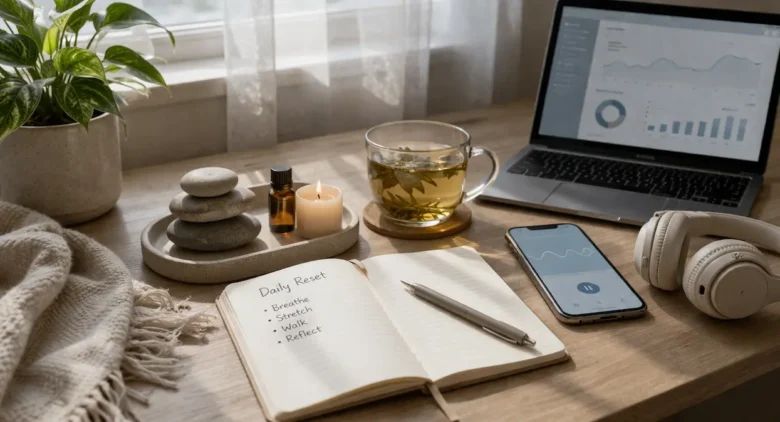
Creating a Personal Recovery Routine
Just as athletes schedule time to recuperate after intense training, everyday life also requires moments of recovery.
Short breaks throughout the day help maintain mental energy.
Consider simple activities such as:
- stepping outside for fresh air
- stretching for a few minutes
- writing down thoughts in a journal
- engaging in a creative hobby
Creative activities like drawing, gardening, or playing music activate different parts of the brain and can provide a refreshing mental break.
Frequently Asked Questions
Is all stress harmful?
No. Some stress can actually be motivating. For example, the excitement before starting a new project or learning a new skill can encourage growth. Stress becomes harmful when it is constant, and there is no time for recovery.
How can I tell if stress is becoming too much?
Common signs include persistent fatigue, irritability, trouble sleeping, difficulty concentrating, and feeling emotionally drained. If stress begins affecting daily life or health, it may be helpful to seek support from a qualified professional.
Are relaxation techniques enough for severe stress?
Relaxation strategies can be very helpful for everyday stress. However, persistent or overwhelming stress sometimes requires guidance from healthcare or mental health professionals.
Final Thoughts
Stress is a natural part of life, but it does not have to control your well-being. By learning how the stress response works and practicing simple techniques regularly, you can strengthen your ability to handle challenges with greater calm and clarity.
Small changes often create the biggest impact. Something as simple as mindful breathing, regular movement, or setting boundaries around technology can gradually improve your overall resilience.
Over time, these habits help create a healthier relationship with stress. Instead of feeling overwhelmed by life’s pressures, you begin to respond with greater confidence, balance, and control.
Note: This article is intended for educational purposes and should not replace professional medical or psychological advice.